Living futures
Since 1995, I have been working professionally with futures. Forecasts for major international banks and my doctoral dissertation were the beginning. They were followed by vision processes for nonprofit organizations and the German federal government. Since 2015, Futures Literacy and the method of Futures Literacy Laboratories have been at the heart of my work.
The path to my current work as a designer and facilitator of futures processes has included a number of stages, important influences, formative experiences, powerful encounters, and much more. Here are a few of them:
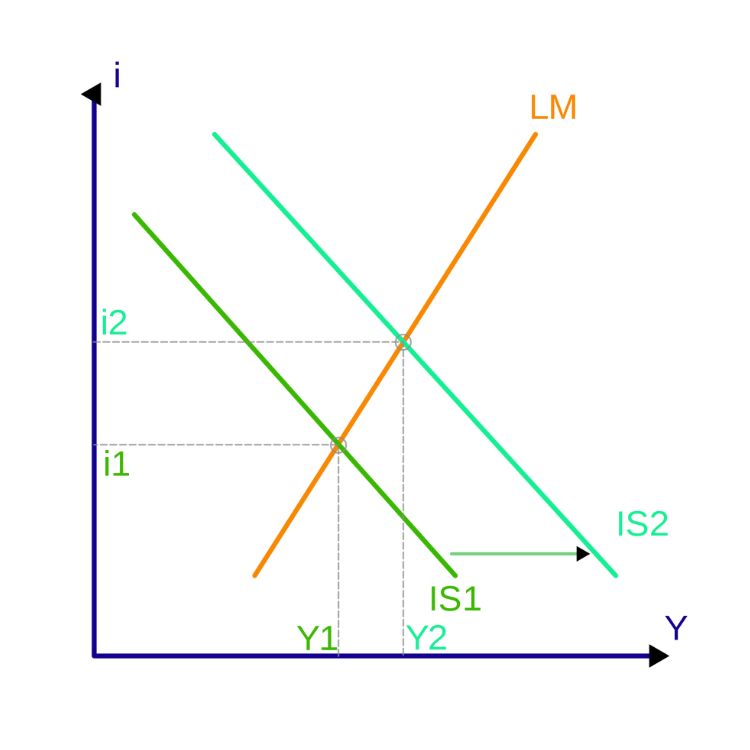
Fascinated by the idea that entire economies could be steered with monetary and fiscal policy, and with the career ambition of becoming a diplomat, I studied economics from 1987 to 1992 at Saarbrücken University and then in a Ph.D. program at the University of Oregon.
I learned how to work with models and numbers, which is still valuable today. But my discomfort with some of the assumptions of economics kept growing.
As a young reader of “The Economist,” I followed the world-explaining bank economists with fascination, and then became one myself: from 1995 at Dresdner International Research, then Merrill Lynch recruited me, and later I moved to JP Morgan.
Around the globe, I explained to clients what was happening in Europe and especially in Germany. And I produced many forecasts about what would happen next.
In 2002, I had enough of the high pace of investment banking and moved to Deutsche Bank Research, joining the Macro Trends team. There, I was able to focus on long-term themes such as demographics, growth, education, health, and quality of life.
Thanks to experienced colleagues, I was able to learn new methods: trends and scenarios became part of my toolkit. And, in 2007, I met Riel Miller for the first time at a conference in Barcelona.

At the beginning of 2009, the newly founded think tank “Center for Social Progress” opened its doors.
My goal was to bring greater attention to the concept of quality of life in Germany so that we could narrow the gap to the countries with the highest life satisfaction. The federal government’s strategy “Wellbeing in Germany” in 2014/15 was a step in that direction.
After I was able to present at the first Anticipation Conference in Trento in 2015, I fully arrived in the field of Futures Literacy.
After that, I was honoured to support Riel Miller in several roles on the 2018 book “Transforming the Future,” curate the “Futures Literacy Design Forum” in 2019, the “High-Level Futures Literacy Summit” in 2020, and help organize the 2021 conference of the World Futures Studies Federation in Berlin.
Since 2009, I have been self-employed, speaking, writing, and facilitating with a wide range of methods on many different topics together with a large number of partners. More on this under “Approach.”
Alongside my collaboration with the global Futures Literacy network, my training in “The Art of Hosting” has been especially helpful.